

Quick Summary
- Dylan Fitterer wanted to move AUDIOMECH’s playtesting from in-person sessions to remote testing, allowing him to test more often with players in their own environments.
- He ran 10 rounds of remote playtesting, with roughly five players per round, testing onboarding, setup and core mechanics.
- The studies uncovered issues that weren’t visible on development machines, including problems with music genres and volume levels, as well as friction in the game’s onboarding and Audio Surge mechanic.
- Player feedback led to several iterations, including making personal music the default onboarding path and making players invincible during Audio Surges, creating a more enjoyable experience.
About Dylan Fitterer and AUDIOMECH
AUDIOMECH is the upcoming title from Dylan Fitterer, an indie developer best known for the Audiosurf series. Dylan has been releasing commercial indie games since 2008, starting with Audiosurf and later shipping Audiosurf Tilt, Audiosurf 2 and Audioshield.
Music has always been central to his work and AUDIOMECH continues that legacy. The game’s core idea revolves around syncing gameplay with players’ own background music apps, turning personal music libraries into part of the game experience.
Founder Story
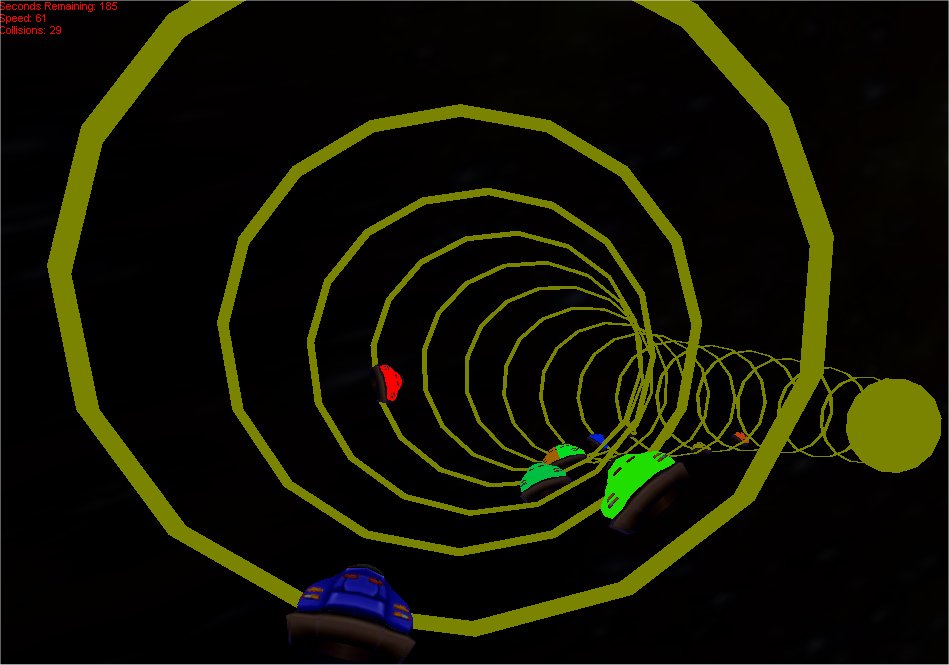
We asked Dylan about his journey into game development and what first motivated him to start making games. This is how he described it:
“I started making indie games in 2001, before Steam existed, so that was a pretty wild direction to take. Aiming too big was my problem for quite a while, but BestGameEver.com was the solution. It was a website I launched to remind myself to stop trying to make the “best game ever” and instead focus on finishing. The site promised a “free game every Friday” and I kept that up for 6 months.
It eventually felt like time to make something bigger – something that could sell. I picked my favorite weekly game, Tune Racer, and decided to spend a few months getting it ready for a commercial release.
Months became years (and years), but Tune Racer finally emerged as Audiosurf. It was my first big game, and it was finally ready to start sharing in 2007. It got a lot of attention at IGF that year – and that’s when Valve reached out.”
It’s a beautiful story that serves as a reminder that games aren’t always born fully formed. They’re built through persistence, iteration and a willingness to keep shipping, learning and refining. Even when the path isn’t obvious.
Challenge
Playtesting had always been part of Dylan’s process. Early Audiosurf builds were tested entirely in person, first with friends, then with testers from the local community. Those sessions were incredibly valuable, but they were also time-consuming and hard to scale.
As AUDIOMECH’s alpha matured, Dylan wanted to move beyond in-person testing and try remote playtests. The game’s defining feature, synchronization with background music apps, meant it needed to be tested in players’ real environments, using their own setups, devices and habits.
Early attempts at online testing worked well, but they came with friction. Finding testers took time and running playtests through general video conferencing tools made the process difficult.
What Dylan needed was a way to test more often, with less logistics, while still retaining the richness of live playtesting.
Solution
That’s when Dylan turned to Antidote.
Using the platform, he was able to run frequent remote playtests without the usual pain of dealing with logistical issues. Tests could be set up quickly and players from Antidote’s community were ready to jump into early AUDIOMECH builds.
Over time, Dylan ran around 10 rounds of online playtesting, with roughly 5 players per round, all recruited through Antidote’s community. This complemented the earlier in-house sessions and allowed for far more iteration.
Two platform features stood out in particular:
- Video recordings
- Think-aloud commentary
- System audio recording
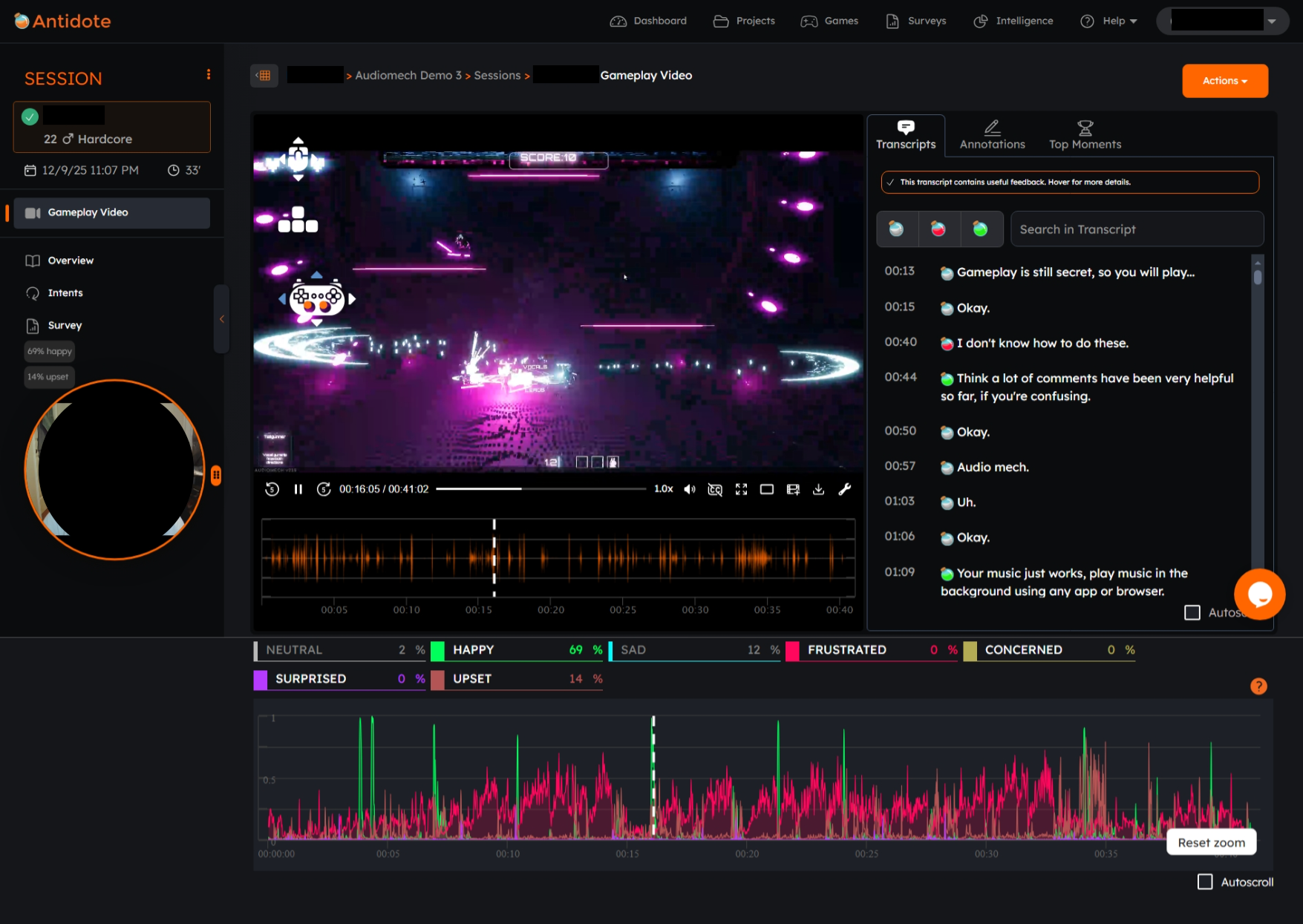
Figure 1. One of the remote playtests was completed on our Antidote platform. In here, you can see data collection features like face & gameplay recordings, transcript and emotion detection. (sensitive data like the player’s face and username are blurred for confidential reasons)
System audio recording was especially critical for AUDIOMECH. The feature captures what players hear through their headphones or speakers during the session.
For a music-driven game that adapts gameplay to the player’s own tracks, this context is essential. Without knowing what song was playing, how loud it was or how the game responded to it, analyzing the session would be incomplete.
Together, these made remote sessions feel much closer to live, in-person playtests. Dylan could see confusion, hesitation and “aha” moments as they happened, especially during the game’s critical first 10 minutes.
As he put it:
“It’s so nice to just click a few buttons and have playtests run while I sleep.”
Result
The impact on AUDIOMECH was “transformative”.
Playtesting allowed Dylan to fine-tune the game’s onboarding and messaging, helping decide what to cut, what to reiterate and what players needed to understand earlier. Beyond general tuning, three major insights stood out:
- First, players who used their own music from the very beginning learned the game faster and enjoyed it more. That discovery reshaped the onboarding flow, making choosing personal music the default “golden path” experience.
- Second, remote testing exposed technical issues tied to music genres and volume levels, problems that never showed up on dev machines. Fixing these was essential for the game to work reliably in real-world conditions.
- Third (and critical), playtesting revealed a major flaw in the game’s most exciting feature, Audio Surge. Originally, musical “big moments” made the game harder, often killing players right as the song peaked. Watching testers struggle (and sometimes die mid-chorus) made it obvious this was anti-climactic.
A few iterations later, the solution was clear. During surges, players become invincible. The feature finally delivered on its promise and made the overall experience more enjoyable.
These insights wouldn’t have surfaced without watching players physically experience the game for the first time.
Why Dylan Fitterer Recommends Antidote
Reflecting on the experience, Dylan emphasized how powerful it was to quickly see real players struggle through early ideas and how necessary that discomfort is.
Working with Antidote made it possible to:
- Run frequent remote playtests without handling recruitment or logistics
- Watch real first-time reactions through video and think-aloud feedback
- Validate onboarding, setup, and core mechanics in players’ own environments
- Iterate confidently, round after round
As Dylan puts it: “you watch the sessions, cry a little, collect yourself and make the next version better.”
That loop, repeated often enough, is how AUDIOMECH found its footing.