
The average refund rate for games on Steam is estimated to be roughly 10%. This means 1 in 10 buyers request their money back if their initial impression isn’t good enough.
That first impression comes down to the First Time User Experience (FTUE), the very first minutes a player spends with your game.
We’ve run hundreds of FTUE studies and in this article, I wanted to share 5 common mistakes we see game devs make that make players hit that refund button.
Information Overload

Too much text, too many systems explained upfront or complex mechanics introduced all at once before a player has even taken their first action.
When we speak with development teams about this, they usually explain that they built a lot of depth into their game and want players to understand all of it right away. That intention makes sense, but the result is often the opposite of what they hoped for. During testing, we see players skim past tutorial text without absorbing it, nodding along without really processing what they just read, and then struggle later when they need that information.
This usually shows up in post-session surveys and interviews too, where participants list confusing tutorials as one of the reasons they didn’t enjoy the gameplay.
Games like Slay the Spire handle this well by introducing card types and mechanics gradually across the first several runs, rather than explaining the entire system in one sitting. Players learn one layer, get comfortable, then the next layer gets introduced.
This subtle approach goes a long way in helping your audience ease into your game.
Friction Before Gameplay
Downloads, account creation, patch installations, prolonged match queuing… 😬
By the time some players start playing, they’ve already gone through five or six steps that have nothing to do with the game itself.
We often hear from teams that these steps feel necessary from a technical or business standpoint, and sometimes they are. But every extra step is also a chance for someone to give up before they’ve even seen your game in action. During our sessions, we’ve watched playtesters get visibly frustrated by everything they needed to do before even reaching the first cutscene. It seems like a small issue, but that initial friction dilutes excitement and sets a negative tone for the rest of the session.
With so much distraction and competition from other games, keeping the time between launch and actual gameplay as short as possible is critical.
Fortnite is a good reference point here. Despite being a massive live-service game with accounts, cross-progression, and constant updates, the team has invested heavily in getting players from launch to match as quickly as possible, because they understand that every additional second of loading screens costs them players.
Tutorial Separation
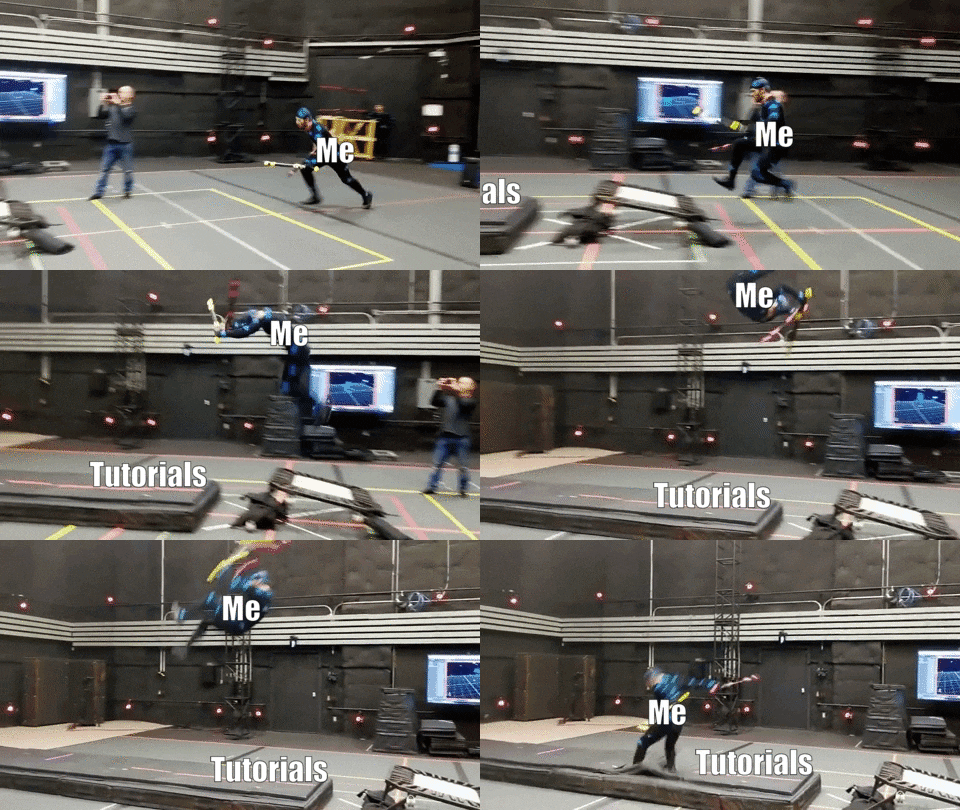
Onboarding that feels disconnected from real gameplay is one of the most common issues we flag.
Players complete tutorial tasks in an isolated environment, everything makes sense, they feel confident. Then they get dropped into the deep end and suddenly feel lost.
One of the best examples of getting this right is Portal 2. The initial gameplay in that game essentially is the tutorial. Players learn to use the portal gun by solving real puzzles that gradually introduce new concepts, rather than being taken to a separate practice room and told what each button does. By the time the game considers the tutorial ‘over’, players have already been playing the game the whole time.
We see the opposite constantly during some playtests. A combat tutorial happens in a controlled arena with no real stakes, then players enter the game and have no idea how to apply what they just learned once there’s pressure, enemies behaving unpredictably with other systems layered on top.
Clicking Without Learning
Players tap the highlighted button, press the glowing icon, and complete the tutorial step. But they don’t understand why they did what they did.
This is one of the trickiest problems for teams to catch on their own, because it looks like success from a data standpoint. Completion rates look great and everyone finishes the tutorial.
But when we ask playtesters follow-up questions or observe what happens once the highlighting and prompts disappear, it often becomes clear that players were just following visual cues rather than learning the underlying system.
We saw this play out clearly during a session for a crafting game, where players breezed through the tutorial by clicking every highlighted resource and button they were told to. Minutes later, in open gameplay, several of them had no idea how to combine items or navigate the crafting menu on their own. The tutorial had taught them where to click, not what any of it meant.
While this mostly applies to mobile games, the lesson here isn’t to rely on visual cues to make players understand what needs to be done. Just like with tutorial separation, this step shouldn’t feel disconnected.
Learning and doing need to work together.
Mismatch Between Marketing and Experience
This point is often less talked about, but it’s just as important as the rest.
If the trailer shows fast-paced combat and dramatic set pieces, the gameplay shouldn’t open with twenty minutes of story exposition and slow progression.
When this happens, players arrive with expectations and the opening experience doesn’t match that promise. During playtests, we’ve had players comment directly on this gap. After seeing banners, store descriptions, character art, concept trailers… their expectations were already shaped before they even pressed play. But once they started playing, that initial excitement noticeably dropped.
This applies beyond the trailer itself. If your store page markets specific elements or frames your game a certain way, you need to meet that expectation by setting the right tone in the first 30 minutes of gameplay.
The Bottom Line
These five patterns show up across almost every genre we test, but the specifics always depend on your game. A narrative-heavy RPG can get away with more exposition than a competitive shooter. A complex strategy game needs different pacing than a mobile puzzle title.
What I’ve shared here are the most common observations we’ve made across hundreds of studies, not a universal checklist.
But if any of these sound familiar, they’re worth looking at closely. First impressions are hard to win back and you need to make sure that they are not lost because of simple mistakes.