
Good news!
It’s launch day and your game finally appeared on storefronts after months or years of hard work. That’s the end of the road, right?
At Antidote, we work with companies during the development stage, but just as often, we work with them after their titles go live. This usually happens when:
- Games that need a second wind
- Studios trying to figure out why growth/retention stalled
- Teams looking to expand into new markets
Whatever the reason, investigating why post-launch performance missed expectations is critical. Over time, I’ve noticed a handful of approaches that consistently help studios navigate this post-launch phase.
I will talk about them down below:
Timing your launch (and your re-launch) strategically
One thing that sometimes gets overlooked is timing.
I’ve seen promising games launch into a week where a massive AAA title dropped or where three other games in the same genre released within days of each other.
This applies just as much to post-launch moments as it does to the initial release. If you’re planning a big content update, a relaunch or trying to reignite interest in your game, check what else is happening in the industry calendar first.
And data backs this up.
An analysis of 155 AAA single‑player games from 2021-2024 found that nearly 70% launched in just five months of the year, with 45% clustered between mid‑August and mid‑November. This heavy clustering strongly correlates with weaker performance (Newzoo, 2025). In other words, when too many big titles fight for the same attention window, everyone tends to do worse.
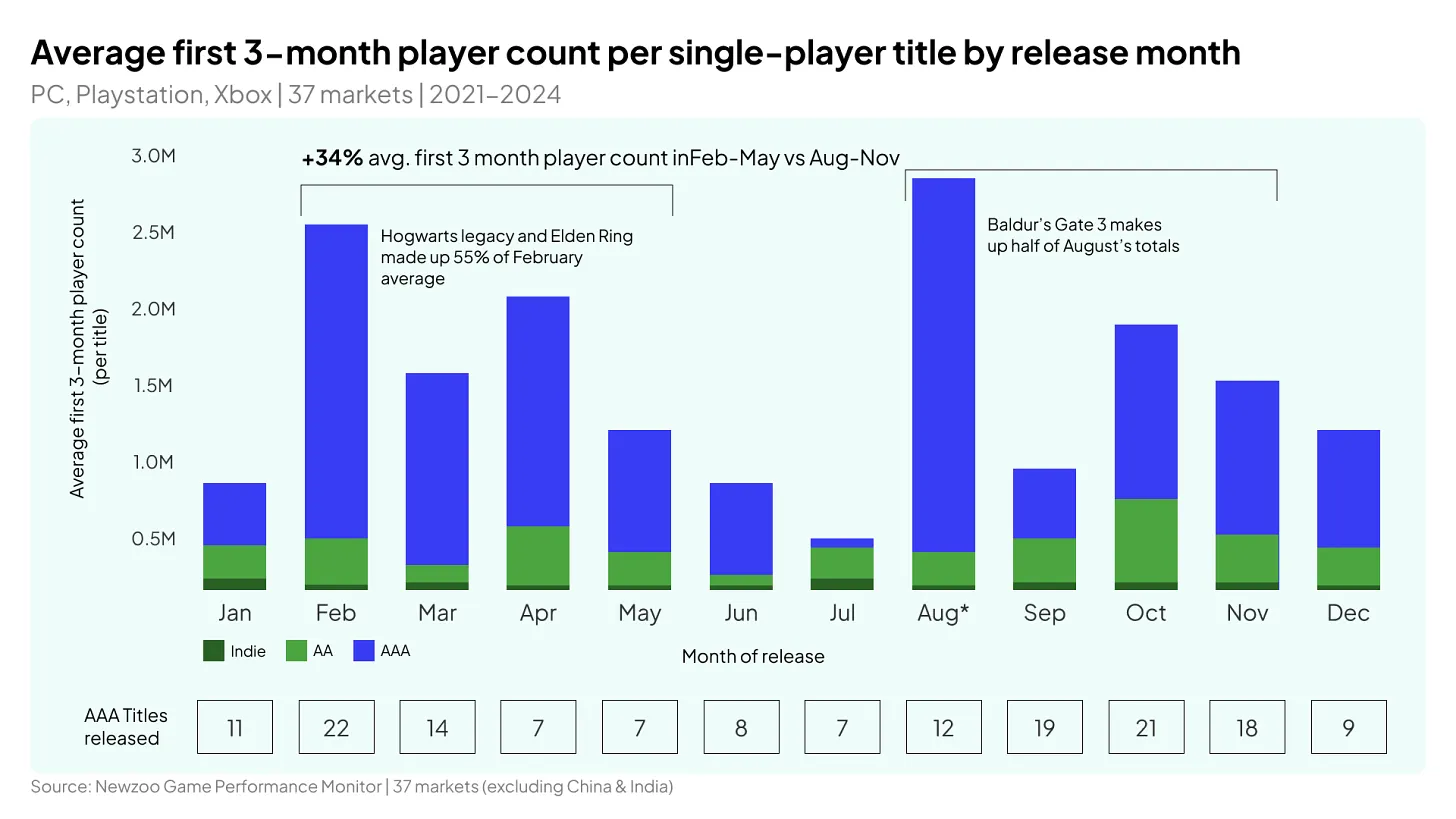
Fig. 1 The infographic showing average first 3-month player counts by release month (Source: Newzoo)
You don’t need to avoid every busy period entirely, that’s often impossible, but you can at least avoid stepping directly into the shadow of something like a GTA 6 release.
Soft launches are one of the best tools I’ve seen studios use here. Instead of committing to one big launch moment, you roll out in a controlled way first. This gives you room to:
- stress test your infrastructure
- validate your onboarding flow
- start building community channels
- experiment with different marketing angles
all before you’re fully exposed to your entire potential audience at once.
We’ve helped a good number of studios run soft launches and the ones who take this approach tend to walk into their full release with a much clearer picture of what’s working and what needs adjusting. It removes a lot of the guesswork that normally only becomes visible after it’s too late to change course easily.
Looking beyond your original target market
If your game isn’t performing well in one region, that doesn’t mean it’s destined to fail everywhere.
We’ve seen this firsthand when running market research campaigns. A studio launches with a specific market in mind, usually North America or Western Europe because that’s where they assumed their audience lived and the results are lukewarm. But when you dig into other regions, you sometimes find a completely different reception.
Markets like Latin America and the Middle East, for example, often get overlooked simply because they weren’t part of the original plan. But these regions can offer more receptive audiences, less saturated competition and in some cases, better margins than the market you initially targeted.
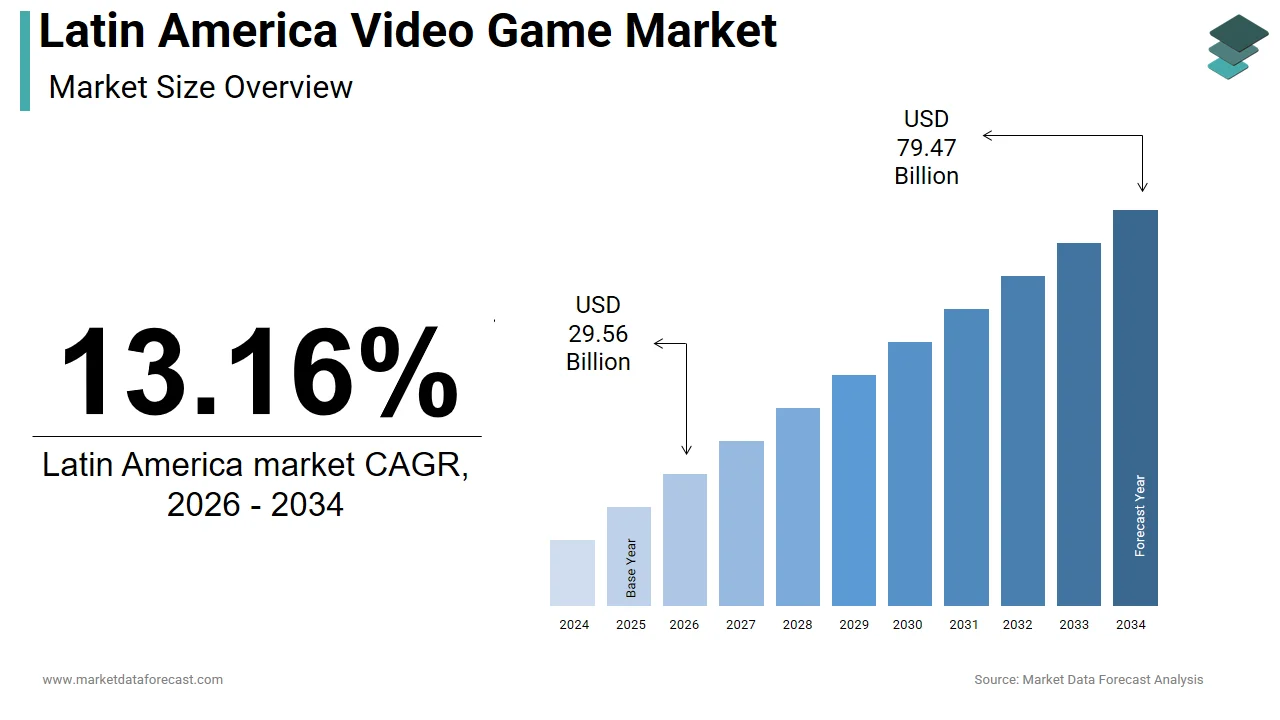
Fig. 2 Data showing the projected growth of the Latin America video game market from 2024 to 2034. (Source: Market Data Forecast)
The important thing here is that expansion isn’t just translation. Real localization means:
- understanding regional preferences
- what resonates culturally
- what pricing feels fair locally
- how players in that market discover and evaluate games
Treating a new region as a copy-paste of your original launch rarely works as well as studios hope. If your growth has plateaued in your home market, it’s worth asking whether the problem is really about your game or whether you just haven’t found the right audience for it yet.
If you want to know more about running a market research campaign for your game, you can check out our article that explains how.
Why community can't wait until the end
This is the mistake I see most often and it’s the one that’s hardest to fix after the fact.
Too many studios treat community building as something that starts a few months before launch, once marketing officially kicks off. By that point, you’re trying to build trust and engagement from scratch, in a compressed timeline, while also trying to generate hype. That’s a lot to ask of any campaign.
The studios that do this well start early (I mean extremely early), well before there’s even a playable build worth showing off publicly. They bring players into the development process itself. Regular playtesting, transparent updates and sharing the messy parts of development. That early group of players become your advocates who talk about your game because they care about it. And you can’t put a price tag on that.
In fact, games with active pre‑launch communities see about 40% higher player retention than those that don’t (Wayline, 2025). Discord’s own numbers go further: PC players play 6× longer when at least one Discord friend is in the game and 8× longer with three friends.
For indie studios especially, this approach is a MUST. You may not have the budget for a big marketing push, but you can create a Discord server, post regular dev updates and invite a handful of early supporters into your process. A good rule of thumb from industry guides is to start building your community 12-18 months before launch, with a game page live from day one so wishlists start accumulating early.
If you’re past launch and still haven’t built this, it’s not too late to start, but it is harder. The trust and organic reach you get from starting early is difficult to replicate once you’re already competing for attention post-launch.
Testing your assumptions about who your players actually are
This last one might be the most common blind spot I encounter:
studios building for an audience they assumed exists, without ever really validating it.
Sometimes this comes from chasing whatever genre or mechanic is trending. Other times it’s much simpler, a developer builds the game they personally want to play, without stepping back to ask who else might want to play it too. Both are understandable instincts, but both carry risk if you never test the assumption.
Jason Della Rocca calls it the “Field of Dreams Syndrome”, where devs focus on the game they want to make and assume customers will just find it. This is great if you’re designing a game for an audience of one (yourself), but dangerous if you’re counting on that game to pay the bills.
What I recommend is running broader demographic and audience testing early in development, rather than narrowing your research to only the audience you assumed you were building for. This is often uncomfortable because it can surface results you didn’t expect. Maybe your game resonates more with a completely different age group or a different type of player than you originally imagined.
And trust me, it does happen! We help studios & publishers run these types of concept validation studies and the results can be literally jaw-dropping.
But that discomfort is worth it. When you validate who your real audience is, your marketing stops being a guessing game. You can speak directly to the people who are willing to buy, instead of spreading a message trying to appeal to an audience that was never quite right in the first place.
Where This Leaves You
If there’s one thing I want studios to take from all this, it’s that launch day isn’t the end of the story and it’s not too late to make meaningful changes if things aren’t going the way you hoped.
Whether it’s rethinking your timing, exploring new markets, finally building the community you skipped earlier or taking an honest look at who your players really are, these are all things you can act on right now, not things you needed to have figured out months ago.
Your launch is one moment. What you do after it is what determines whether your game has a future.