


Watch the Video
The Evolution of Snow in Video Games
Have you ever wondered what environmental effect gives game developers nightmares? It’s not fire and it’s surprisingly not water.
It’s snow ❄️
Unlike a plain dirt road, snow is a total diva to code. It has to crush under your boots, drift in the wind and somehow not crash your device while doing it. Snow levels have been around forever, but getting them to look good has been a decades-long struggle.
Let’s take a quick look.
The 2D Era
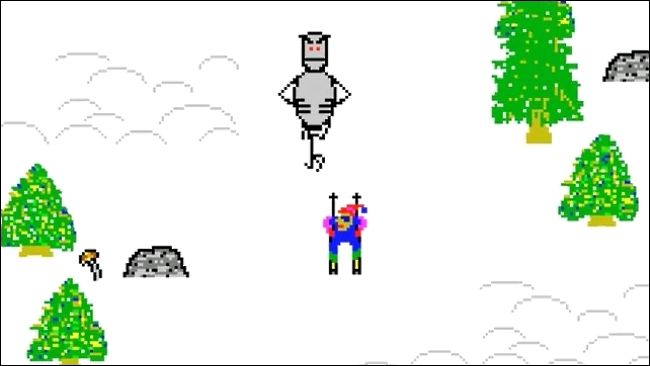
Back in the 8-bit and 16-bit days, rendering actual depth was out of the question. Devs had one move and that was color shorthand.
If a level was supposed to be cold, they just painted the ground solid white, tossed a few blue pixels on screen and spawned tiny white squares that fell vertically. Games like SkiFree or the classic IceCap Zone in Sonic 3 are great examples.
Your brain saw a white screen, heard the bop of the soundtrack and went “Yep, that’s winter.”
The Early 3D Days
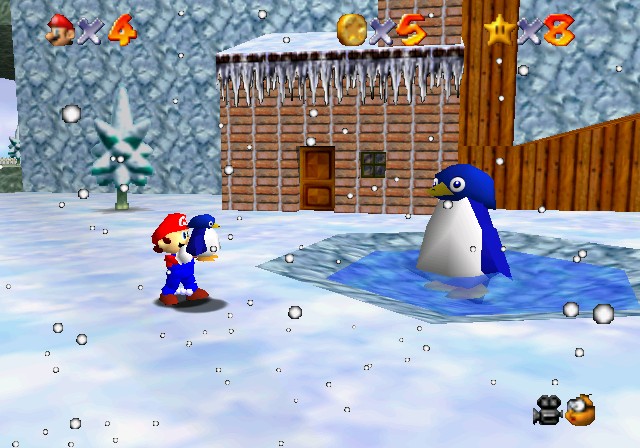
When 3D gaming arrived in the mid‑90s, snow sometimes took a step backward visually. Early consoles couldn’t afford lots of geometry or particles, so snow often looked like someone spilled white paint over blocky shapes 😅
To compensate, devs leaned on atmosphere and sound. In games like Super Mario 64 or Metal Gear Solid, the snow terrain wasn’t that impressive, but that loud crunch‑crunch‑crunch under your feet (paired with heavy fog) did most of the work to make you feel freezing.
The HD Era
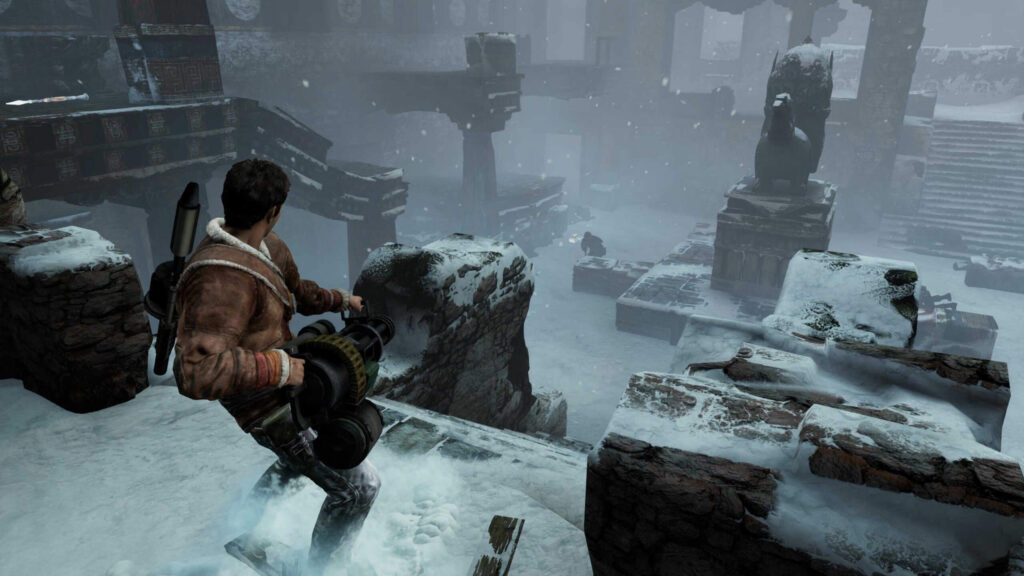
By the mid-2000s, consoles finally had enough horsepower to make winter feel like winter. Games like Uncharted 2 stopped using static images and started adding atmospheric tricks.
Suddenly, snow would stick to your character’s jacket, high winds would swirl around the camera and you could see your character’s icy breath puffing out into the air. It was a massive leap forward for immersion, even if the snow itself still wasn’t fully “simulated”.
Modern Mastery
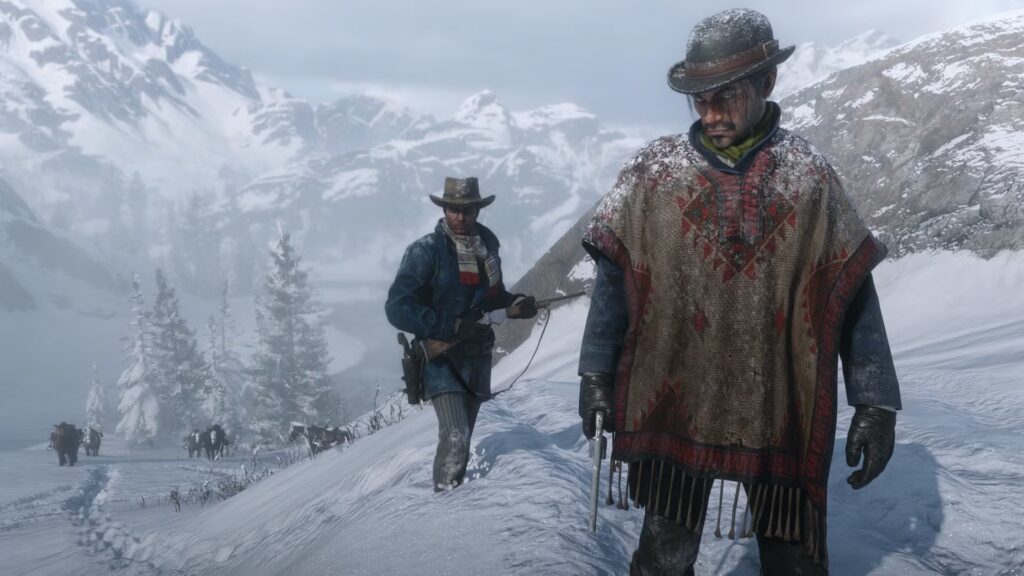
Fast forward to today and snow tech is mind-blowing. One of the best examples of this is Red Dead Redemption 2.
When you trudge through the snowy mountains as Arthur, your boots leave deep trenches that stay behind you. You can even roll down a hill and watch snow stick to individual parts of your clothes.
So, how do devs do this without blowing up your hardware, I hear you ask?
- Tessellation: Instead of forcing the game to load millions of detailed snow mounds all at once, the engine creates fine detail only right where you’re walking or looking.
- Deformation maps: Think of the snow like digital memory foam. The game tracks your exact movement path and instantly squishes the ground geometry downward to match your footprints.
- Subsurface scattering: Real snow is not like a flat coat of white paint because light sinks into the surface before it bounces back out. Modern game engines mimic this light scatter so the snow has that crystalline glow instead of looking like plastic.
While all of that sounds fancy and is packed with complicated terms, digital snow has come a surprisingly long way since the days of flat white pixels on a screen.
The fact that it took decades of hardware upgrades and brilliant dev tricks just to make a footprint look right shows you just how notoriously difficult snow is to pull off. So the next time you boot up a winter map, take a second to appreciate all the hidden wizardry that went into making every single step feel real 😉